
Behind the Brand
Inside Our Workshop: Meet the Hands Behind Your Bag
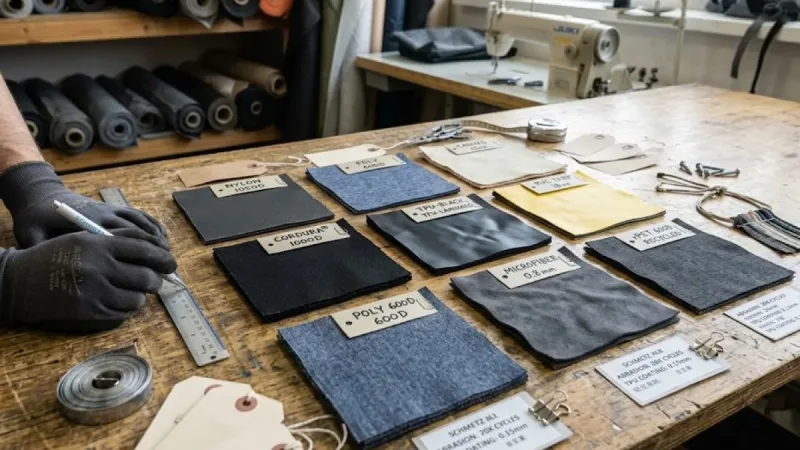
More hands, less speed
There's a version of this industry where a bag is designed once and then produced endlessly, faster and cheaper each cycle. That's not how we work. At Elowen & Rue, every bag passes through several distinct stages, each handled by someone who specializes in exactly that step — and that deliberate slowness is the whole point.
From sketch to sample
Every design starts on paper, not on a production line. Our design process typically goes through five or six rounds of refinement before a single prototype is approved for sampling.
During this stage, we're asking questions most customers never see the answers to: Does the strap sit comfortably at this length? Does the hardware placement interfere with how the bag opens? Does the silhouette hold its shape when only half-full? Each round of sketching and sampling narrows the design until it earns its place in the collection.
Sourcing the leather
Once a design is finalized, sourcing begins. We work with tanneries that supply full-grain leather specifically selected for density, consistency, and how well it's likely to age. Every hide is inspected before it enters production — natural markings are expected and welcomed, but structural weaknesses or inconsistent thickness are not.
The cutting process
Leather cutting is done by hand, piece by piece — not stamped out in bulk by machine. This matters more than it might sound.
- Each panel is positioned to make the best use of the hide's natural grain direction, ensuring strength runs the right way through the finished piece
- Natural markings are considered during placement, so a subtle scar or variation ends up somewhere that adds character rather than looking accidental
- Cutting by hand also reduces waste, since a skilled cutter can work around imperfections rather than cutting blindly through them
Stitching and assembly
This is where the bag truly comes together — and where the most time is spent. Our artisans stitch each piece individually, checking tension, alignment, and seam strength as they go, rather than relying on an automated line that only catches errors after the fact.
Hardware — clasps, zippers, rings — is set by hand as well, tested for smooth movement and secure attachment before the bag moves to final assembly.
A single bag can take several days to complete from first cut to finished piece. That's dramatically slower than mass production, but it's also the only way we know to catch small issues before they become permanent flaws.
Final inspection
Before any bag leaves the workshop, it goes through a final quality check — examining stitching consistency, hardware alignment, interior finishing, and overall shape. If a piece doesn't meet our standard, it doesn't move forward, regardless of how close it came.
Why we work this way
This process is slower and more expensive than mass production, and it means we simply cannot produce bags at the volume larger brands do. That's a trade-off we're comfortable with. It's the reason our collection stays small and deliberately curated — because craft, done properly, resists being rushed.
When you carry an Elowen & Rue bag, you're carrying the result of that process — not just materials, but attention, care, and time.